Good morning. It is Thursday, March 5, 2026.
Welcome to the inaugural edition of the bcdW Daily Pulse. If you are reading this, you likely operate in the high-friction, high-reward space between the Americas and Asia. You are the operator who knows that a supply chain shift in Vietnam is inextricably linked to a retail trend in Mexico City. You are the strategist who understands that "global" is a lazy word for a very specific set of local connections.
At bcdW Magazine, we don’t believe in noise. We believe in signals. Every morning, we will bring you five distinct dots. Your job is to decide how to connect them.
Here is what the world looks like today.
1. The Brand Bridge: The K-Beauty Pivot to "Bio-Wellness"
For years, the narrative of Korean beauty in the United States was one of "novelty": sheet masks, glass skin, and 10-step routines. That era is officially over. Today, March 5, 2026, the signal is much more clinical.
Amorepacific’s IOPE brand has just expanded its footprint across Sephora’s North American locations, but they aren't selling "beauty." They are selling "Bio-Wellness." This move marks a significant shift in how Asian brands enter the American market. They are no longer competing on price or exoticism; they are competing on R&D and pharmaceutical-grade legitimacy.

We are seeing a massive "Wellness Crossover" where the lines between skincare, longevity science, and retail are blurring. For American manufacturers, the lesson is clear: if you are planning to enter the Korean market, or if you are watching Korean brands land on your doorstep, the "secret sauce" is no longer the marketing: it’s the underlying data.
The bridge between Seoul and New York is being reinforced by lab coats, not just influencers. Brands that fail to realize this will find themselves stuck in the "novelty" bin while the market moves toward systemic health.
2. Global Scaling Pulse: Sustainability as a Sales Tool
A fresh report from EY released this morning highlights a stark reality for U.S.-based consulting firms: "Data-Driven Sustainability" is no longer an ESG checkbox. It is the number one requirement for selling professional services into the Asian market.
From Singapore to Tokyo, clients are no longer asking if you can scale their business. They are asking if you can prove the carbon neutrality of the scaling process itself. For the American consultant, this is a cultural pivot. We are used to selling efficiency and growth. Asia is demanding "Resilient Growth."
At bcdW, we’ve often argued that no consulting firm has ever sold expertise and geography at the same time. This EY data proves why that gap is so dangerous. If you have the expertise but don't understand the local regulatory demand for sustainability data, you are irrelevant. If you have the geography but no expertise, you are a tour guide. The pulse today says: integrate your data, or lose the contract.
3. The Ground Force: The OECD’s Warning on "Service Friction"
The OECD issued a warning today regarding the rising barriers in international service trade. While the world focused on tariffs on physical goods: steel, chips, cars: the real "Ground Force" battle is happening in the invisible sector: services, legal compliance, and digital trade.
For firms attempting to move from the Americas into Asia (or vice versa), the "red tape" is getting thicker, not thinner. This is where the theoretical meets the practical. You can have a brilliant market entry plan, but if you don't have the ground-level execution to navigate local licensing and labor laws, your plan is just a PDF.
This is the core of our philosophy. We don't just cover the bridge; we show you the potholes. The "Ground Force" isn't about high-level strategy; it's about the grit of operational shifts. As trade barriers rise, the value of the "local-to-local" connector increases. In 2026, the most valuable asset isn't your product: it's your ability to bypass friction.
4. Future City Chronicles: LG CNS and the "Inverted Bridge"
We’ve spent decades watching American tech "disrupt" Asian cities. In 2026, the bridge has inverted. LG CNS is currently expanding its "Smart Building" Digital Transformation (DX) infrastructure into mid-market American cities like Kansas City and Nashville.
This isn't just about "smart thermostats." It’s about viewing the city as a biological entity. These systems use AI to manage energy loads, pedestrian flow, and waste management in real-time. Why Kansas City? Because the future of the American city isn't in the overcrowded hubs of the coast: it's in the urban frameworks of the interior that are hungry for modern civic infrastructure.

A building that thinks is not a luxury; it’s a necessity for a climate-uncertain future. When we look at how cities deal with aging populations or climate shifts, we see that the solutions are often born in the hyper-dense environments of Seoul or Osaka and exported to the expanding grids of the Americas. The "Future City" is a shared laboratory between two continents.
5. The Mobility Map: The End of the "Salary Nomad"
The final dot for today comes from a 2026 Talent Mobility Report. The data suggests a profound shift in how global talent moves. For the last decade, professionals moved for the "highest bidder." Today, talent is choosing destinations based on "City Tech" and "Climate Resilience."
Young professionals in their 20s and 30s are no longer just looking at the salary. They are looking at how a city manages its heat, its water, and its digital connectivity. A city with a high salary but low climate resilience is seen as a bad investment.
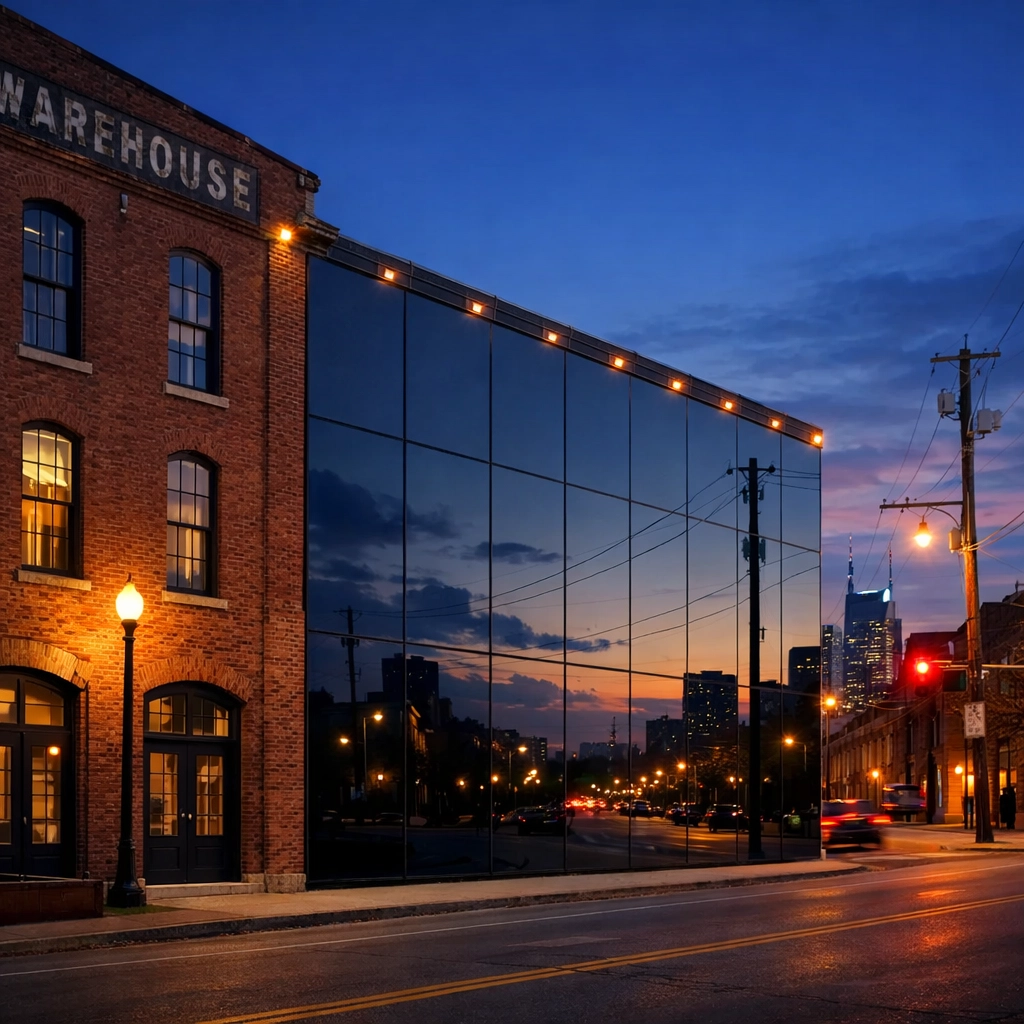
This is where global talent meets local ambition. We are seeing a rise in "Horizontal Collectives": groups of experts who move between cities not because they were transferred by a corporation, but because they are chasing a specific urban lifestyle that promises longevity. If your company is trying to hire the best, you aren't just selling a job; you are selling the city the job is in.
Connecting the Dots
If you look at these five stories in isolation, they are just news items.
- A beauty brand expands.
- A report is published.
- The OECD warns.
- A tech firm enters Nashville.
- Talent moves.
But look closer. There is a pattern.
The "Brand Bridge" shows that we are moving toward bio-data. The "Global Scaling Pulse" shows that this data must be sustainable. The "Ground Force" reminds us that trade barriers will try to stop this flow. The "Future City" shows where the infrastructure for this new world will be built. And the "Mobility Map" tells us who will be living inside it.
The question isn't whether these shifts are happening. The question is whether your business is positioned to be the bridge, or the obstacle.
We'll see you tomorrow for the next pulse.
: The bcdW Editorial Team
For more insights on how we connect these dots, visit our Editorial Voice & Tone Guidelines or learn more About bcdW Magazine.